Best Food Halls in Nashville You'll Actually Love
Skip the trend talk. Here's where Nashville actually eats between shifts, and how to tell a real food hall from a dressed-up food court.
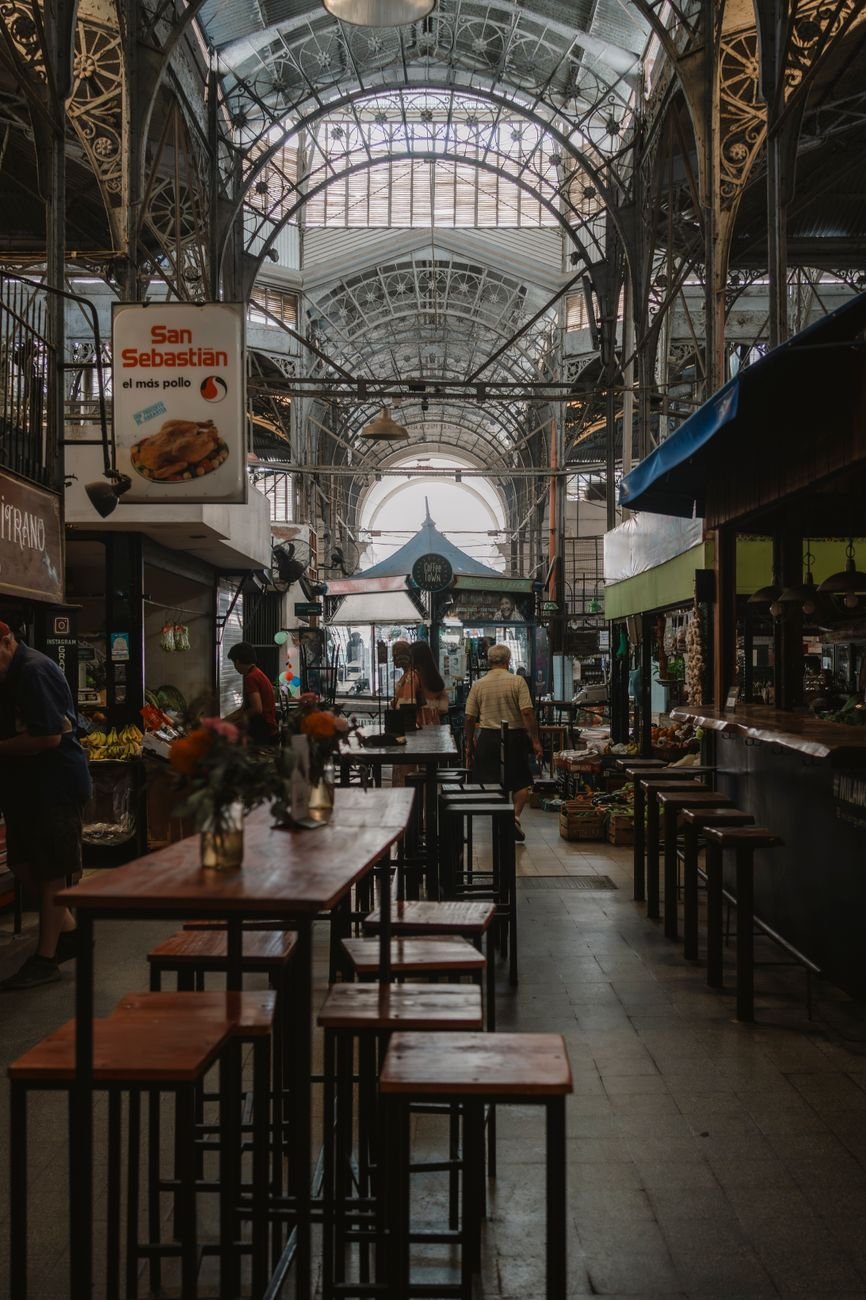
The Nashville Farmers' Market Market House sits under its long metal roof near Bicentennial Mall, a few blocks from the Capitol, and on any weekday afternoon it's doing what it has done for years: selling produce at one end and plates of Kurdish, Ethiopian, Mexican, and Southern food at the other, to state employees on lunch break, hospital staff between shifts, and retirees who were coming here before "food hall" was a phrase anyone used. That's the right starting point for a conversation about the best food halls in Nashville: not a trend piece about condo-tower amenities, but a look at where this city actually eats when it isn't performing for a bachelorette weekend.
Nashville's national reputation runs through Lower Broadway, where honky-tonks blast dueling cover bands and out-of-town parties spill onto the sidewalk in matching shirts. That scene is real, and it draws the crowds it draws. But most of the people who actually live and work here, the musicians who don't play Broadway, the nurses and physicians who staff the hospital systems that employ as many Nashvillians as the music industry does, the state workers a few blocks from the Market House, eat somewhere else entirely. Food halls, done right, are where that other Nashville shows up.
So What Are the Best Food Halls in Nashville, Really?
A food hall is a different animal from a mall food court, and the distinction that matters is who's cooking. In a genuine food hall, the stalls are usually run by independent cooks or small local operators rather than licensed chains, and the room itself is built for lingering: shared tables, a bar pouring local beer or wine, enough space to sit with a group where everyone ordered something different. Nashville has added more of these over the past several years, and the map says something about how the city has grown. Germantown, once known mainly for its historic rowhouses and its farmers market, has become a corridor where new restaurant space keeps opening. The Gulch, built up fast around its condo towers, has picked up its own food-hall-style stops for residents and office workers who don't want a full sit-down dinner every night. Wedgewood-Houston, still settling into its identity as an arts district full of converted warehouses, has drawn the same kind of interest from operators looking for a neighborhood with room to grow.
The Farmers' Market Still Sets the Standard
Ask longtime residents where to send a visitor who wants a real food hall instead of a manufactured one, and the Market House at the Nashville Farmers' Market still comes up first. It predates the current wave by years, it sits next to actual produce stands rather than retail boutiques, and it has always served a working crowd rather than a tourist one. The mix of vendors turns over with time, but the format hasn't changed: order at the counter, carry your tray to a shared table, and expect to sit next to someone who has no idea food halls are supposed to be a trend.
What to Look For Before You Sit Down
- Cuisine that reflects who actually cooks in Nashville, not a repeated hot chicken concept at every stall.
- Independent or local operators rather than the same fast-casual chains found in any airport.
- Seating built for groups, since the format only works if people can split up and order different things.
- A beer or cocktail counter that treats itself as part of the draw, not an afterthought bolted onto the food.
- Enough breathing room that a Tuesday lunch doesn't turn into fighting a weekend brunch crowd.
How to Approach a Food Hall Visit Like a Local
Go with more people than you'd normally take to a restaurant. That's the real advantage of the format: four people can order from four different stalls and compare plates at one table, which a single kitchen can't replicate. Skip the traditional dinner rush if timing allows it. Early evening on a weeknight, or a weekday lunch, gets you the space and the calm that make a food hall pleasant instead of chaotic. Treat the visit as a sampling ground rather than a single big meal, ordering smaller portions across two or three stalls instead of a full plate from one.
A good food hall is also the setting where Nashville's hot chicken shows its range, since a stall serving a milder version can sit a few feet from someone building a full Southern plate, and nobody has to commit to one restaurant's single take on it for the whole meal.
For a fuller sense of the neighborhood some of these halls sit in, Germantown's mix of historic rowhouses and newer restaurants rewards a slower walk before or after, past the market itself and toward Bicentennial Mall.
The best food halls in Nashville won't make anyone forget Lower Broadway, and they're not trying to. They solve a different problem: how a growing city feeds people who don't want a chain, don't want a full sit-down dinner every night, and don't want to pick one cuisine over another on a given evening. Start at the Market House if you want the version that's been doing this longest. Then work outward into Germantown, the Gulch, and Wedgewood-Houston to see how the newer version fits a city still figuring out what to build next.